


Buying Tips
As collectors we spend a lot of time researching, cleaning, adjusting, restoring, looking for the period correct buckle or making the strap for the watches. The lack of commercial pressure permits us to share some basic tips for a satisfying vintage watch purchase, which so far worked fine for us.
Precision of the watch
Don’t expect quartz precision from vintage watches. A loss of precision is normal even if the dial states ‘chronometer’. To get a vintage watch to chronometer precision would usually mean to replace pieces of the movement, which then would not be in original state any more. An error of about ±1 – 2min per day is not disturbing, but if the watches lack of precision is bothering you, get it cleaned and oiled (see below).
The precision of a vintage watch is best when fully wound. As the mainspring unwinds, the precision declines. So keep the watch fully wound.
Be aware that also the power reserve is lower as in a new watch, unless the mainspring has been replaced.
Refinished dials / hands
Many dials and / or hands of vintage watches are redone. Either the luminous material (radium or tritium) has deteriorated and got replaced or sometimes even the print of the dial is completely redone.
We have nothing against well refinished pieces in a watch but they need to be disclosed and correctly described by the seller. Watches with refinished pieces loose a great part of their value, and hence are more affordable than completely original watches. This permits a vintage watch lover to be able to afford pieces he / she would never be able to buy, if completely original.
Swapped pieces / service pieces
The same argumentation as for refinished pieces applies here. Swapped parts or parts which are original to a brand but not of the period of the watch must be disclosed and correctly described by the seller.
Official OMEGA service centres always send back the removed original pieces with the restored or repaired watch. ROLEX service centres do not return exchanged pieces.
Sometimes pieces are interchangeable between different models, in some instances even between models of different brands. Dishonest (or not knowledgeable) sellers sometimes describe such watches as ‘prototypes’. We advise to be extremely careful with this term and only buy ‘prototypes’ which are documented. If you are unsure, drop a line to the heritage service of the concerned brand, they might be able to identify or reject the piece. In general, if it is too good to be true it is most often fake.
The parts which are mostly wrong, meaning not period or model conform are the crown, the crystal, the watch hands and of course the leather watch strap / watch bracelet. Especially watches of the 1920ies or 1930ies have the wrong watch hands or mismatched watch hands mounted. The older the watch, the lower the probability that it still has its original leather watch strap/ metal bracelet.
Buy what you like
Gut feeling is a very reliable tool for a satisfying watch purchase. Sometimes a worn watch is more attractive than a spotless model. You won’t know why, but you feel connected to it. It does not always need to be a Rolex either: some vintage watches of lesser known brands can be as cool, rare and valuable as pieces from well known manufacturers.
Enjoy your watch
A watch should not be hidden away in a vault. This might be necessary for historically important and extremely rare watches, which are bought exclusively as an investment, but watches have been built to be worn and enjoyed.
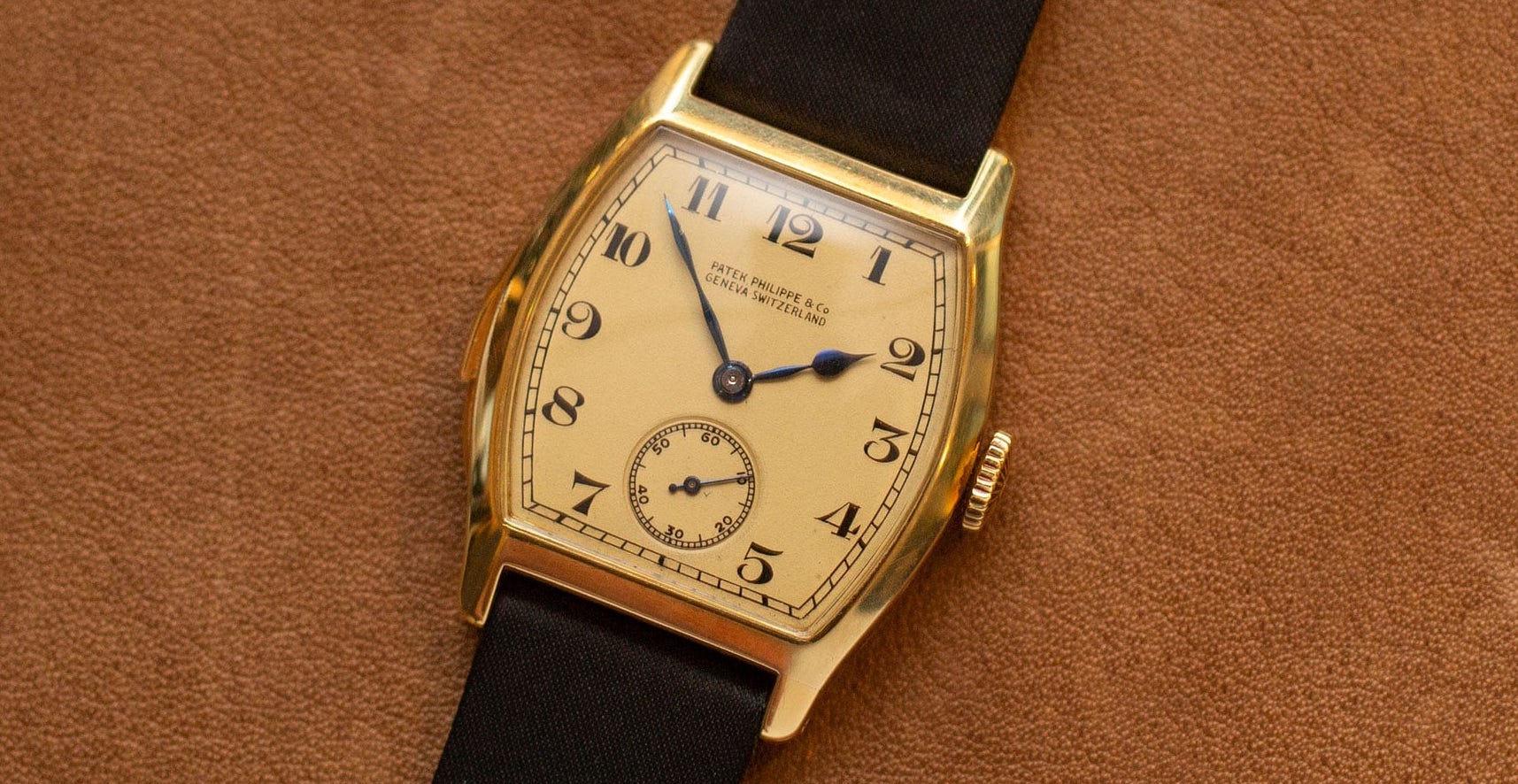
Even in a time, where a wristwatch is obsolete and time can be assessed on your computer, cell phone and other devices, just wearing a vintage watch as a fashion accessory to match your belt, your shoes, your dress or your glasses, for the pure joy to see it on your wrist from time to time, is well worth it.
Vintage watch maintenance
It is normal, that a vintage watch has some surface wear and personally we don’t like NOS watches that much, as they lack what makes a vintage watch special: character! A vintage watch which is worn (within limits) keeps its long term value more than one which is over-restored. To keep your vintage watch clean, just swipe it with a dry non-abrasive microfibre cloth. If you need to remove traces of sweat or dirt, moisten slightly the cloth and do not use detergents.
Silver will tarnish. You can enjoy the patina (that’s what I do) or you can slightly polish it with the least abrasive products you can find.
To the contrary to what you would expect, gold tarnishes as well. This brownish/blue/purple patina usually adds value to the watch as it takes extremely long time to develop. I would suggest not to polish Gold at all, but just to use the microfibre cloth for a clean as mentioned above.

Vintage movements need some attention to work properly. Get them cleaned and serviced as soon as you notice a loss of precision which bothers you. Mostly, cleaning and oiling is enough and It is not necessary to service a watch every year.
When not worn on your wrist, we recommend to store your vintage watch in a dark and dry place.
 coronetwatches.com